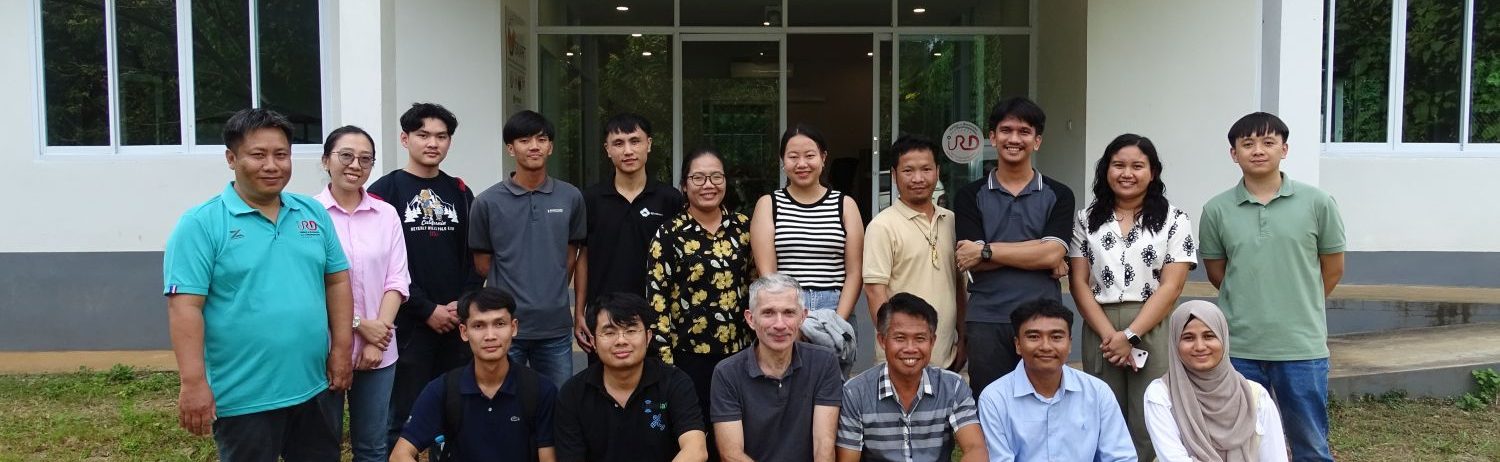
SMART training session 2025

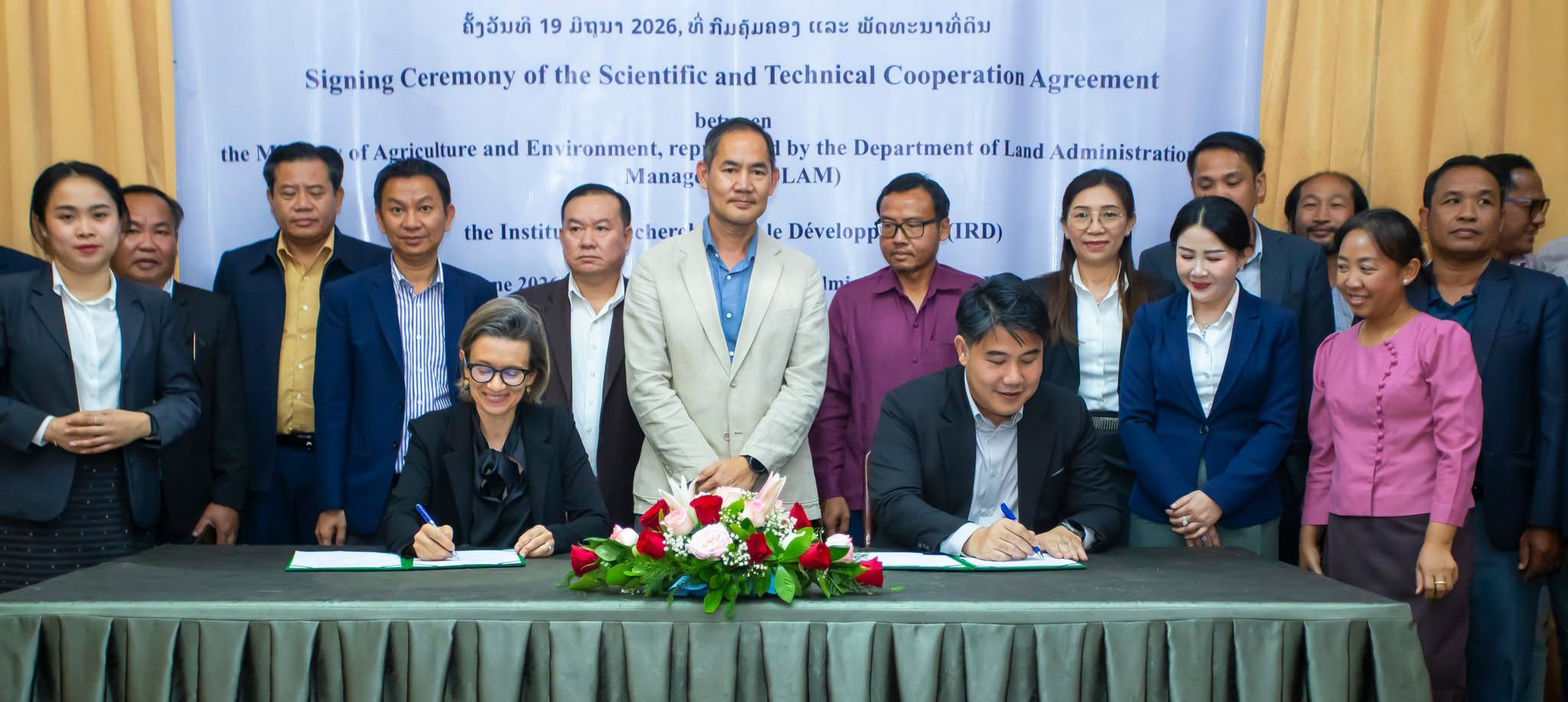
Sensors capable of accurately measuring water level exist on the market, but they are generally expensive, fragile and ill-suited to the aggressive conditions encountered in rivers, particularly in the inter-tropical zone. A self-contained, float-controlled water level gauge based on visible laser Time-of-Flight (ToF) technology, designed as an integrated device for automatically measuring and recording water level data (Pierret et al., 2025), was developped as part of the Work Package 5 of the ANR DinBuam project. The focus of this first PSF SMART training session, funded by IRD, hosted by Alain Pierret and Khampasith Chanthavong, and held at the SMART station in Ban Laksip, Lao PDR, from October 27 to 31, was to introduce participants to the construction, deployment and use of this ad hoc technology. The training session brought together about 20 participants from Lao PDR, Bangladesh, Cambodia, India, Philippines, and Vietnam.
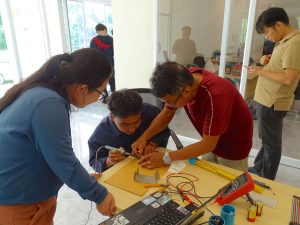
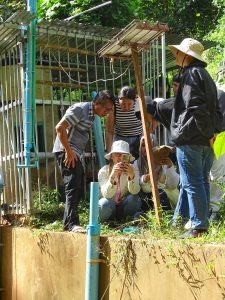
Laboratory work at SMART station and fieldwork at Houay Pano catchment

More news

Hydrological modelling training at SMART

A hydrological modelling training was given from November 10 to 13 by Dr Laurie BOITHIAS, Dr Gabriela CORDOBA, and Dr. Alain PIERRET within PSF SMART, at the interface between M-TROPICS CZO and DinBuam ANR research project. Training program included theoretical presentation of the SWAT+ model, promotion of long-term observatories of the environment and awareness raising […]

Indo-French remote sensing fall school at IISc Bangalore

An Indo-French fall school was organized from October 28 to 30, 2019, at Indian Institute of Science (Bangalore). It gathered about 50 attendees (PhD students, researchers, engineers). THEIA, the Indian Institute of Science, and the CEFIRSE (Nicolas  Baghdadi, Sekhar Muddu, Mehrez Zribi) lead the event organization. The main objective was to present different applications of […]

Hydrological modelling training with SWAT+ in Luang Prabang, Laos, Oct. 8-10

From Oct. 8 to Oct. 10, Laurie BOITHIAS (CNAP, GET) offered a hydrological modelling training with SWAT+ (Bieger et al., 2017). The objective for the participants was to learn how to use the tool and get basic knowledge of numerical modelling. The training lasted 3 days. The attendees first implemented the tool by using long […]

Search